Geology
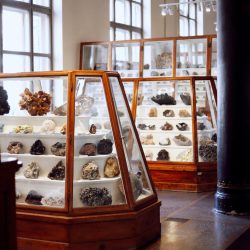
The study, collection, and research in geology at the Natural Science Museum began between 1941 and 1963, focusing on the Skopje area. These early investigations laid the foundation for the museum’s first mineral and rock collections. In the 1990s, with the hiring of a geologist, the museum was able to expand and improve the study, collection, and presentation of minerals and rocks, which represent part of our natural heritage and have important industrial significance.
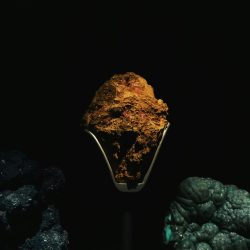
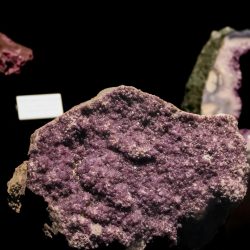
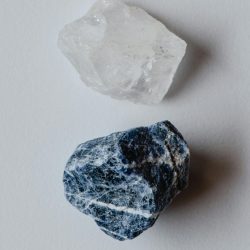
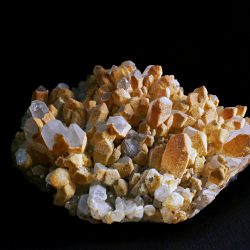
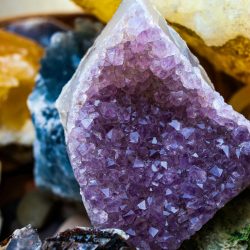
The museum’s collection includes outstanding specimens such as gypsum, lorandite, stibnite, pyrite, chalcopyrite, corundum, galena, granite, gneiss, diorite, basalt, marble, limestone, aleurolite, ferricoronadite, micaschist, sphalerite, quartz, barite, johannsenite, and others. Today, approximately 2,190 specimens of minerals and rocks are catalogued, with 108 displayed in the permanent exhibition. These belong to:
Mineralogical Collection – organized by chemical composition (sulfides, sulfates, silicates, oxides, hydroxides, carbonates, etc.)
Petrographic Collection – including igneous, sedimentary, and metamorphic rocks
Scientific research in the department primarily focuses on mineralogy. The permanent mineralogical-petrographic exhibition was first opened in October 1976, marking the museum’s 50th anniversary.
Contact: Biljana Karamachoska, Curator
Email: b.karamachoska@musmacscinat.mk
Laboratory Assistant: M.Sc. Ivica Zarkadov